Which Incoterms Should a Beginner Exporter Choose? – Complete Guide
If you are a beginner exporter, one of the most important decisions you will make in international trade is choosing the right Incoterm. Many new exporters make mistakes here — and those mistakes can reduce profit, increase risk, or even create legal problems.
In this guide, I will explain:
- What Incoterms are?
- Why they are important for beginners?
- Which Incoterms are safest for new exporters?
- Which terms you should avoid at the start?
- Real practical examples.
- Smart strategy for choosing the right term.
Let’s understand step by step.
What Are Incoterms?
Incoterms (International Commercial Terms) are international trade rules created by the International Chamber of Commerce (ICC).They simply define:
- Who pays for shipping?
- Who handles export clearance?
- Who pays insurance?
- Who is responsible for damage during transit?
- When does risk transfer from seller to buyer?
In simple words: Incoterms clearly divide responsibilities between exporter and importer. Without clear Incoterms, disputes happen and can break trust confusions.
Why Incoterms Matter for Beginner Exporters
As a beginner exporter, you may think: “Buyer is paying — so everything is safe.”
Not always, If you choose the wrong Incoterm:
- You may pay unexpected freight cost
- You may take unnecessary risk
- You may handle logistics you don’t understand
- You may reduce your profit margin
Smart exporters choose terms that match:
✔ Their experience,
✔ Their financial strength,
✔ Their logistics knowledge, ✔ Their power of taking responsibilties,
Best Incoterms for Beginner Exporters
Let’s break down the most important options which can remove confusion and problems in exporting goods to India or Third countries.
1. EXW (Ex Works) – Safest for Beginners
What It Means
Under EXW:
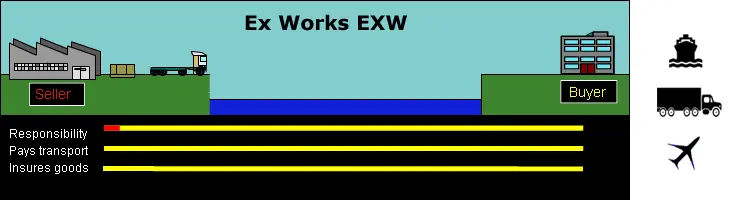
- Your responsibility ends once goods are ready at your factory/warehouse.
- Buyer handles transport.
- Buyer handles export clearance.
- Buyer arranges shipping.
- Buyer takes risk from your warehouse.
Why It Is Good for Beginners ?
- Very low risk
- No shipping responsibility
- No freight headache
- No insurance responsibility
You just manufacture and hand over goods.
Example
You sell carpets to India.
You say:
Price: $10,000 EXW Birgunj Warehouse
Buyer:
- Arranges truck
- Handles customs
- Handles shipping
- Takes risk after pickup
Disadvantage
- Lower control
- Less profit potential
- Buyers sometimes prefer more control-friendly terms
Conclusion: 👉 Best safe option for first-time exporters.
2. FOB (Free On Board) – Most Popular for New Exporters
What It Means
Under FOB:
- You handle export clearance.
- You deliver goods to the port.
- You load goods on the ship.
- Risk transfers when goods cross ship rail.
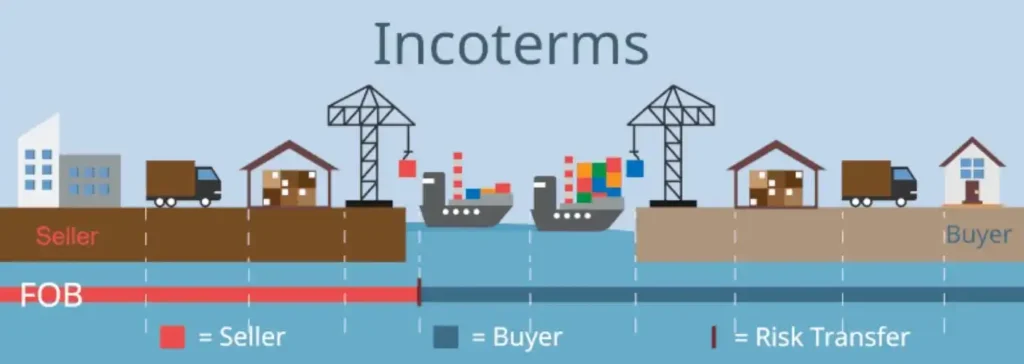
Buyer handles:
- Sea freight
- Insurance
- Destination handling
Why FOB Is Powerful
- You control export process
- You are not responsible for ocean shipping
- You reduce international risk
- Very common in global trade
Most experienced exporters use FOB.
Example
You export carpets from Nepal to Dubai.
You agree:
Price: $15,000 FOB Kolkata Port
You:
- Clear customs
- Deliver to port
- Load container
Buyer:
- Pays sea freight
- Handles shipping insurance
Advantage
- Better profit control
- Professional image
- Standard international practice
Recommendation:
👉 Best balanced option for beginner exporters after gaining basic experience.
3. CIF (Cost, Insurance & Freight)
What It Means
Under CIF:
You pay:
- Freight
- Insurance
- Transport to destination port
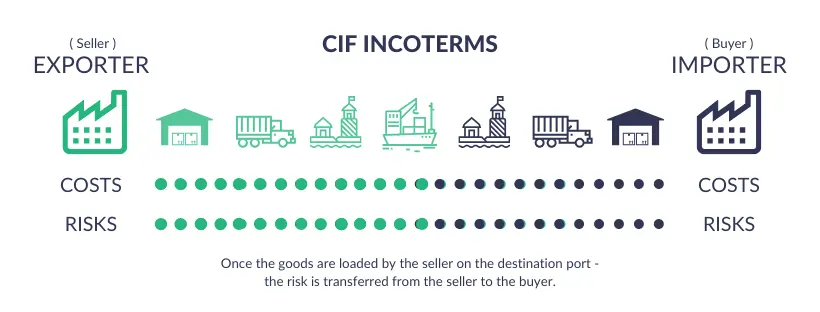
Buyer pays:
- Import duties
- Destination clearance
Risk transfers once goods are loaded on ship — but you pay shipping costs.
Why Beginners Sometimes Use CIF
Some buyers prefer CIF because:
- They want supplier to arrange shipping
- They trust supplier logistics
Example
You export to USA.
You quote:
Price: $20,000 CIF New York Port
You pay:
- Ocean freight
- Marine insurance
Risk for Beginners
- You control shipping but may not understand freight market
- Freight price fluctuation can reduce profit
- Insurance claims may become complicated
Conclusion:
👉 Use CIF only if you understand shipping cost structure.
Not recommended for absolute beginners.
Incoterms Beginners Should Avoid (At First)
1. DDP (Delivered Duty Paid)
Under DDP:
You pay:
- Freight
- Insurance
- Import duties
- Taxes
- Destination clearance
You handle EVERYTHING.
For beginners — this is dangerous.
Why?
- You must understand foreign tax laws
- You manage import regulations
- You risk unexpected cost
Unless you have strong logistics support abroad — avoid DDP.
2. DAP (Delivered At Place)
Better than DDP — but still risky. You deliver goods to buyer location. You manage transport risk. Still complex for beginners.
Simple Comparison Table
| Term | Export Clearance | Freight | Insurance | Risk Level | Beginner Friendly |
| EXW | Buyer | Buyer | Buyer | Very Low | ✅ Yes |
| FOB | Seller | Buyer | Buyer | Medium | ✅ Best Option |
| CIF | Seller | Seller | Seller | Medium-High | ⚠ Limited |
| DDP | Seller | Seller | Seller | Very High | ❌ No |
Smart Strategy for Beginner Exporters
If I guide you practically, go through EXW:
Step 1 – Start With EXW
Learn how export documentation works.
Focus on:
- Invoice
- Packing list
- Export declaration
No freight stress.
Step 2 – Move to FOB
After understanding:
- Customs clearance
- Port procedures
- Container booking
Switch to FOB.
This improves profit control.
Step 3 – Use CIF Only If Buyer Demands
If buyer insists on CIF:
- Calculate freight carefully
- Add buffer margin
- Confirm insurance coverage
Important Risk Management Tips
1. Always Calculate Hidden Costs
Before quoting price:
Include:
- Transport to port
- Documentation cost
- Local handling charges
- Bank charges
Many beginners forget this.
2. Always Use Written Contract
Don’t depend on WhatsApp agreement.
Use:
- Proforma Invoice
- Clearly Mention Incoterm
- Specify Port
- Specify Version Year (Example: FOB 2020)
3. Confirm Incoterm Version
Current standard: Incoterms 2020
Write clearly: FOB – Incoterms 2020
This avoids legal confusion.
4. Talk With Your Freight Forwarder
Before final price:
Ask forwarder:
- Current freight cost
- Transit time
- Container availability
Smart exporters calculate first — quote later.
Real Example for a Beginner Exporter (Practical Scenario)
Suppose you export:
Product: Synthetic Carpet
Country: Nepal to India
Value: $12,000
Option 1 – EXW
You earn safe margin
Buyer arranges truck
Option 2 – FOB
You handle export clearance
Better negotiation power
Option 3 – CIF
You manage shipping to destination port
More responsibility
Best choice for beginner?
👉 FOB
Final Recommendation (My Honest Advice)
If you are new in export business:
✅ Start with EXW to understand system
✅ Move to FOB for better control
❌ Avoid DDP
⚠ Use CIF carefully
Most professional exporters eventually use FOB as their standard term.
Final Thought
Choosing the right Incoterm is not about choosing what sounds attractive.
It is about:
✔ Risk control
✔ Profit protection
✔ Operational capability
✔ Experience level
Smart beginners grow into smart exporters.
If you master Incoterms early — your export business becomes stronger and safer.
Frequently Asked Questions (FAQ)
Q1: Which Incoterm is best for beginner exporters?
FOB is usually the best option because it balances responsibility between seller and buyer while keeping risk manageable.
Q2: Is EXW safe for new exporters?
Yes, EXW is the safest because your responsibility ends at your warehouse. However, profit margin may be lower.
Q3: Should beginners use CIF?
Only if the buyer insists. CIF requires managing freight and insurance, which can be complicated for beginners.
Q4: Why is DDP risky?
DDP requires exporters to manage import duties and taxes in the buyer’s country, which increases legal and financial risk.v