What is Bi.Bi.Ni. in Nepal Banking: Complete Guide for Importers (2026)
While talking about International trade we need to understand about some of procedures because International trade requires proper financial documentation, especially when businesses send payments abroad for imports. In Nepal, one commonly used banking term in foreign trade transactions is Bi.Bi.Ni.
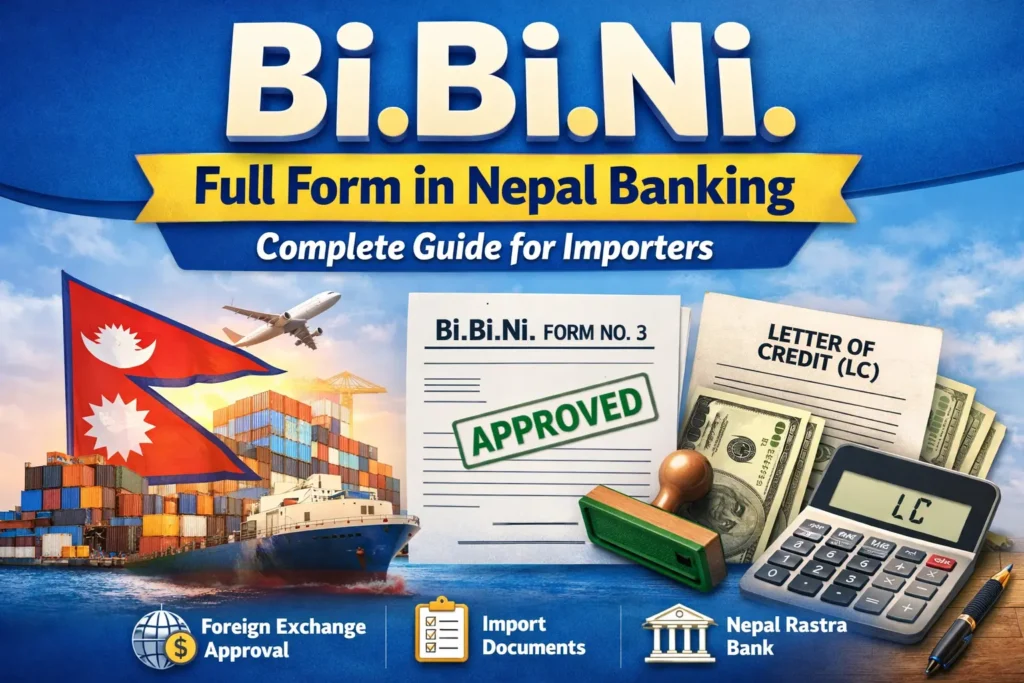
Many new importers, traders, and business owners often hear this term when dealing with banks for international payments but may not fully understand its meaning or importance.
In this article, we will explain:
- The full form of Bi.Bi.Ni.
- What Bi.Bi.Ni. means in Nepal banking
- When Bi.Bi.Ni. is required
- Documents needed for Bi.Bi.Ni.
- The role of banks and regulators in the process
This guide will help importers clearly understand how the Bi.Bi.Ni. system works in Nepal’s foreign exchange management.
What is the Full Form of Bi.Bi.Ni.?
The full form of Bi.Bi.Ni. is: Bideshi Binimaya Nikasi (विदेशी विनिमय निकासी)
In English, it means Foreign Exchange Approval or Foreign Currency Release.
Bi.Bi.Ni. refers to the process through which banks approve and record foreign currency payments made by Nepali businesses to overseas suppliers.
These transactions are regulated under the foreign exchange policies of Nepal Rastra Bank, the central bank of Nepal.
What Does Bi.Bi.Ni. Mean in Nepal Banking?
In simple terms, Bi.Bi.Ni. is an approval or documentation process used by banks when releasing foreign currency from Nepal to another country.
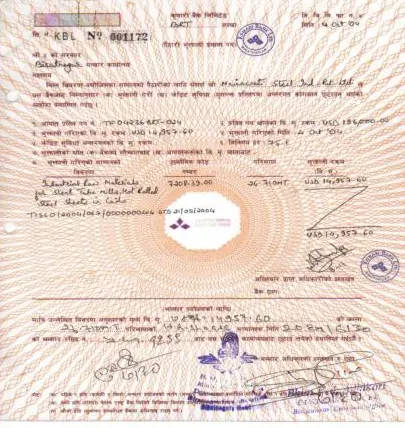
In Nepal’s banking system, Bi.Bi.Ni. (Foreign Exchange Approval) is a mandatory document issued by banks that enables importers to obtain foreign currency for purchasing goods from abroad. It functions as an official endorsement required for customs clearance and is essential when establishing Letters of Credit (LC) or processing international trade payments. This document is commonly known as Bi.Bi.Ni. Form No. 3.
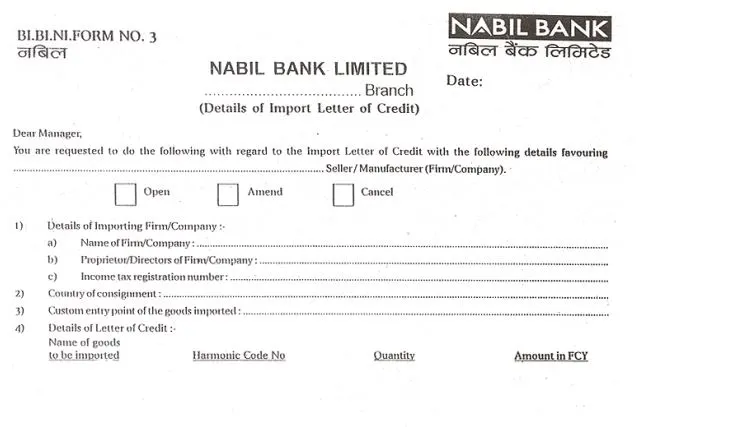
Whenever a company imports goods or services and needs to send money abroad, the bank must ensure that:
- The transaction is genuine
- The importer has proper documentation
- The payment follows foreign exchange regulations
The Bi.Bi.Ni. system helps banks maintain a record of these foreign exchange transactions.
Why Bi.Bi.Ni. Is Required in Import Transactions?
Nepal has strict regulations for foreign currency usage because the country must carefully manage its foreign exchange reserves.
The central bank, Nepal Rastra Bank, monitors all international payments made by Nepali businesses.
Bi.Bi.Ni. is required to ensure that:
- Foreign currency is used only for legitimate business activities
- Imports follow government trade policies
- Illegal or unrecorded foreign payments are prevented
By maintaining these records, the central bank can track how much foreign currency leaves the country.
When Is Bi.Bi.Ni. Required?
Bi.Bi.Ni. is generally required in the following situations:
1. Import of Goods
When a Nepali company imports goods from another country and needs to pay the supplier.
2. Opening a Letter of Credit (LC)
When businesses open an LC through a bank to guarantee payment to foreign exporters.
3. Advance Payment for Imports
Sometimes importers make advance payments before shipment.
4. Telegraphic Transfer (TT)
Direct international bank transfers for business payments may also require Bi.Bi.Ni. documentation.
5. Import of Services
Payments for software services, consultancy, licensing fees, or technical support from foreign companies may also require approval.
How the Bi.Bi.Ni. Process Works?
The Bi.Bi.Ni. process usually involves several steps between the importer and the bank.
Step 1: Import Agreement with Supplier
The importer signs a purchase agreement or receives a proforma invoice from the foreign supplier.
Step 2: Submission to the Bank
The importer submits necessary documents to the bank to initiate the payment process.
Step 3: Bank Verification
The bank checks the documents and confirms that the import transaction follows regulatory guidelines.
Step 4: Bi.Bi.Ni. Record Creation
The bank records the transaction as a foreign exchange payment under the Bi.Bi.Ni. system.
Step 5: Foreign Payment Processing
The bank releases foreign currency and sends payment to the supplier through international banking channels.
Documents Required for Bi.Bi.Ni.
In Nepal many banks provide bi.bi.ni services to promote business smoothly. Banks such as Nabil Bank Ltd, Everest Banks Ltd, Citizen Bank Ltd, Laxmi sunrise Banks Ltd and many others. Banks usually require several documents before approving foreign exchange payments.
Common documents include:
1. Proforma Invoice
A proforma invoice from the foreign supplier specifying the goods and payment terms.
2. PAN Certificate
Business PAN registration for the importing company.
3. Company Registration Certificate
Proof that the importer is legally registered in Nepal.
4. Import License (if applicable)
Certain goods require import permission from government authorities.
5. Letter of Credit Application
If the importer is opening an LC.
6. Customs Documents
Sometimes banks may request customs-related documents depending on the transaction. These documents help ensure the transaction is legitimate and compliant with regulations.
Role of Banks in the Bi.Bi.Ni. System
Commercial banks in Nepal play a major role in implementing foreign exchange regulations. They act as intermediaries between businesses and the central bank.
Banks are responsible for:
- Verifying importer documents
- Recording foreign exchange transactions
- Ensuring compliance with central bank regulations
- Reporting foreign currency payments to regulators
Through these responsibilities, banks help maintain transparency in international financial transactions.
Importance of Bi.Bi.Ni. for Nepal’s Economy
The Bi.Bi.Ni. system is important not only for businesses but also for the national economy.
1. Foreign Currency Monitoring
It helps the central bank track foreign currency outflow.
2. Preventing Illegal Transfers
Bi.Bi.Ni. prevents unauthorized foreign payments.
3. Trade Regulation
It ensures that imports follow government policies.
4. Financial Stability
Managing foreign exchange helps maintain national economic stability.
Example of Bi.Bi.Ni. in Real Business
Let’s look at a simple example.
As we all know that I, myself working in same department in one of the reputed company of Nepal. So we usually import yarns from Turky worth USD 50,000.
The process may look like this:
- Supplier sends proforma invoice
- Importer submits documents to bank
- Bank verifies the transaction
- Bank records Bi.Bi.Ni. for foreign exchange release
- Payment is sent through international banking channels
This ensures the payment is legally recorded and monitored.
Common Challenges Faced by Importers
Some importers may face difficulties during the Bi.Bi.Ni. process.
Common issues include:
- Incomplete documentation
- Delays in bank verification
- Regulatory changes in foreign exchange policy
- Incorrect invoice details
Proper documentation and communication with banks can help avoid these problems.
Tips for Importers Using Bi.Bi.Ni.
To ensure smooth foreign exchange transactions, importers should follow these tips:
- Maintain accurate documentation
- Verify supplier invoices carefully
- Understand foreign exchange regulations
- Work with experienced banking officers
Proper preparation can make the import payment process much smoother.
Future of Foreign Exchange Management in Nepal
As global trade becomes more digital, banking systems are also modernizing their processes.
In the future, Nepal may introduce more digital platforms for:
- Electronic trade documentation
- Online foreign exchange approval systems
- Automated compliance verification
These developments could make the Bi.Bi.Ni. process faster and more efficient for businesses.
Conclusion
Bi.Bi.Ni., or Bideshi Binimaya Nikasi, is an essential part of Nepal’s banking system for managing foreign exchange payments related to international trade.
It ensures that all foreign currency transactions made by businesses are properly documented, regulated, and monitored by financial institutions and the central bank.
For importers in Nepal, understanding the Bi.Bi.Ni. process is crucial for conducting smooth and compliant international trade operations.
By maintaining proper documentation and working closely with banks, businesses can ensure efficient processing of foreign payments and successful import transactions.
FAQs:
1. What is the full form of Bi.Bi.Ni.?
The full form of Bi.Bi.Ni. is Bideshi Binimaya Nikasi, which means foreign exchange release or approval.
2. Who regulates Bi.Bi.Ni. in Nepal?
Foreign exchange transactions are regulated by Nepal Rastra Bank.
3. Is Bi.Bi.Ni. required for all imports?
It is generally required when foreign currency needs to be sent abroad for import payments.
4. Can businesses send foreign payments without Bi.Bi.Ni.?
No. Banks must record foreign exchange transactions to ensure compliance with regulations.