International trade is growing fast, and today many businesses in Nepal, India, and other countries are importing and exporting products like raw materials, semi finished goods and finished goods worldwide. But one major confusion for traders, exporters, and importers is choosing the right shipping terms.
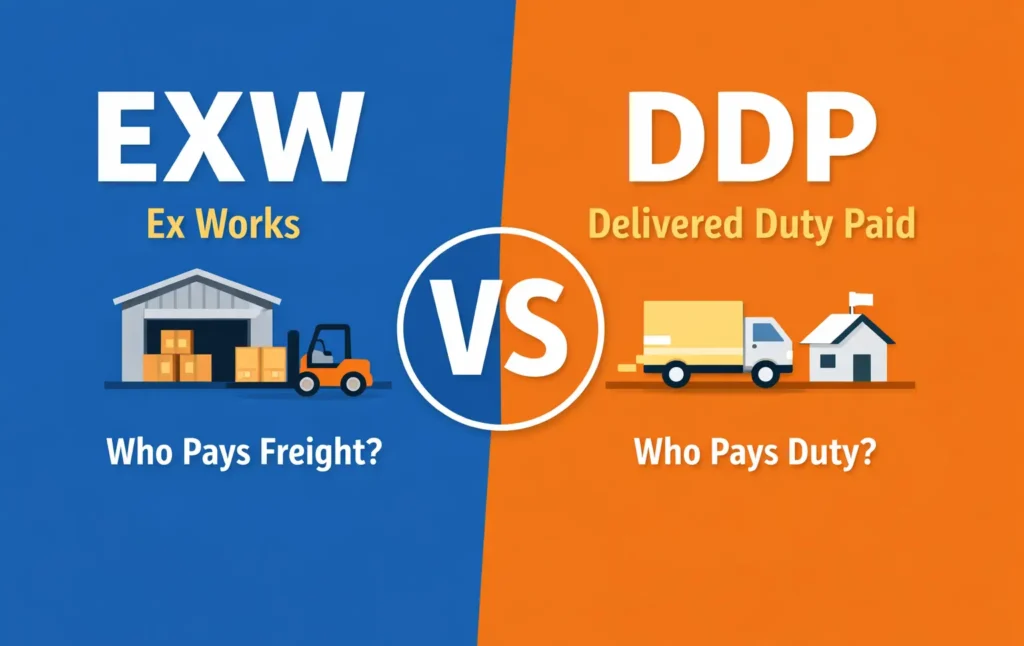
Two of the most commonly used Incoterms are EXW (Ex Works) and DDP (Delivered Duty Paid).
If you are new in import-export business or logistics, you might ask:
- What is EXW?
- What is DDP?
- Which one is better for exporters and importers?
- Who pays freight, duty, insurance, and customs clearance?
In this detailed guide, we will explain EXW vs DDP in a simple and practical way with real-life examples.
What Are EXW and DDP?
Both EXW and DDP are part of Incoterms (International Commercial Terms), published by the International Chamber of Commerce (ICC). These rules define who is responsible for:
- Transportation
- Loading and unloading
- Export clearance
- Import clearance
- Freight charges
- Insurance
- Customs duty and taxes
- Risk transfer point
In simple words, Incoterms avoid confusion between buyer and seller.
Now let’s understand both terms clearly.
What is EXW (Ex Works)?
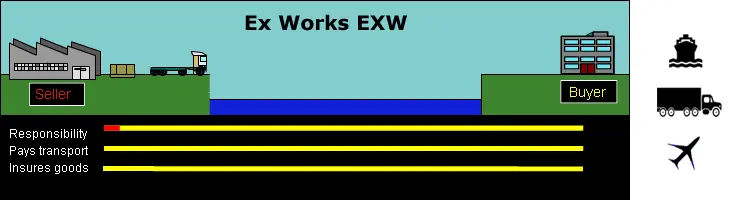
EXW means Ex Works, which is the shipping term where the seller’s responsibility is very minimum and it is best for the seller part. In EXW, the seller says: “Your goods are ready at my location. Now you arrange pickup, transport, customs, freight, duty, everything.”
Under EXW, the seller only makes the goods available at their:
- factory
- warehouse
- shop
- production unit
After that, the buyer is responsible for everything.
Seller’s Responsibility in EXW
Under EXW, the seller only needs to:
- Manufacture/prepare goods
- Pack the goods properly
- Keep goods ready at their location
- Provide invoice and basic documents
That’s all.
Buyer’s Responsibility in EXW
In EXW, the buyer handles:
- Loading goods into truck/container
- Inland transport to port/airport
- Export customs clearance
- Export documentation
- Freight charges (air/sea/road)
- Insurance (if required)
- Import customs clearance
- Import duties and taxes
- Delivery to final destination
So EXW gives full responsibility to the buyer.
Example of EXW :
Suppose you are importing machinery from China to Nepal.
Seller offers:
This means the Chinese supplier will keep the machine ready in their warehouse in Guangzhou. Now you must arrange:
- truck pickup from warehouse
- export clearance in China
- shipping to Nepal
- customs clearance at Birgunj
- delivery to your warehouse
What is DDP (Delivered Duty Paid)?
DDP means Delivered Duty Paid, and it is the opposite of EXW.
In DDP, the seller takes maximum responsibility.
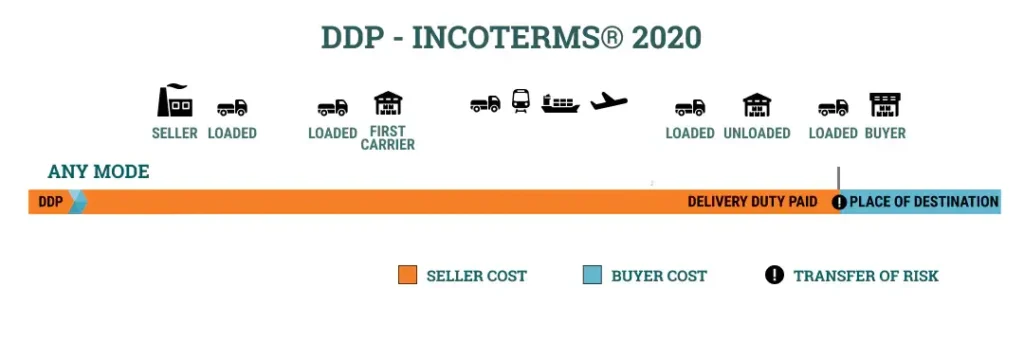
Under DDP, the seller is responsible for delivering goods directly to the buyer’s destination after paying all duties and taxes. In DDP, the seller says: “Don’t worry. I will deliver goods to your door, and I will pay freight, customs, and duties.”
Seller’s Responsibility in DDP
Under DDP, seller handles almost everything including:
- Packing goods
- Loading goods
- Inland transport in seller country
- Export customs clearance
- Freight charges (air/sea/road)
- Insurance (usually included)
- Import customs clearance
- Import duty, VAT, and other taxes
- Delivery to buyer’s location
So buyer receives goods like a normal delivery.
Buyer’s Responsibility in DDP
In DDP, buyer responsibility is very limited:
- Pay seller for goods (including all charges)
- Receive goods at final destination
- Unload goods (depending on agreement)
That’s all.
Example of DDP:
If you are importing laptops from Dubai to Nepal.
Seller offers:
DDP Kathmandu, Nepal
This means the seller will arrange everything:
- shipping
- customs clearance
- taxes
- delivery to your Kathmandu address
You just receive the shipment.
EXW vs DDP: Key Differences (Easy Table)
| Feature | EXW (Ex Works) | DDP (Delivered Duty Paid) |
|---|---|---|
| Seller Responsibility | Minimum | Maximum |
| Buyer Responsibility | Maximum | Minimum |
| Export Clearance | Buyer | Seller |
| Import Clearance | Buyer | Seller |
| Freight Cost | Buyer pays | Seller pays |
| Duty & VAT | Buyer pays | Seller pays |
| Risk Transfer | At seller warehouse | At buyer location |
| Best for | Experienced importers | Beginners & hassle-free buyers |
Risk Transfer Point: EXW vs DDP
This is the most important part for both importer and exporter to do their business smoothly and effectively.
Risk in EXW
Risk transfers to buyer as soon as goods are made available at seller’s premises.
Even if goods get damaged during loading, buyer is responsible.
Risk in DDP
Risk stays with seller until goods are delivered to buyer’s destination.
So DDP is much safer for the buyer.
Cost Comparison: EXW vs DDP:
Many people think EXW is cheaper because the seller gives a low price.
But in reality, EXW can become expensive if you don’t know logistics.
EXW Hidden Costs:
In EXW you may face:
- unexpected export fees
- local transport charges
- freight agent commission
- port handling charges
- documentation charges
- customs delays and penalties
DDP Cost Advantage:
DDP looks costly initially, but it includes everything:
- freight
- duty
- customs charges
- delivery cost
So DDP gives a clear total cost.
Which is Better: EXW or DDP?
Now the big question: which is best?
The answer depends on your experience and control needs.
When EXW is Better?
EXW is best when:
- You have your own freight forwarder
- You understand customs clearance process
- You want full control of shipping
- You want to choose cheaper transport options
- You are importing in bulk regularly
Best for:
- large importers
- export trading companies
- logistics professionals
When DDP is Better?
DDP is best when:
- You are new in import-export
- You don’t want customs tension
- You want door delivery
- You want fixed final price
- You want faster processing
Best for:
- Beginners
- Small businesses
- E-commerce importers
- People importing small parcels
EXW vs DDP for Nepal Importers (Special Insight)
If you are importing goods to Nepal through:
- Birgunj Customs (Raxaul border)
- Bhairahawa Customs
- Tatopani Customs
- Air cargo (TIA Kathmandu)
Then DDP can be very helpful because customs clearance in Nepal sometimes needs:
- correct HS code classification
- VAT calculation
- customs valuation
- import permits (for some goods)
If the seller manages DDP properly, it saves time.
But in Nepal, DDP is sometimes risky if the seller is not experienced in Nepal customs system.
So always verify the supplier’s DDP experience.
Real Business Problem: Why DDP Can Be Risky?
Although DDP sounds perfect, it has some disadvantages too.
Problems with DDP:
❌ Seller may use wrong HS code
❌ Seller may undervalue goods illegally
❌ Seller may delay customs clearance
❌ You have less transparency in duties paid
❌ Difficult to claim if shipment is stuck
So if you are doing high-value imports, EXW or FOB may be better.
Which Incoterm is Best for Exporters?
From exporter side:
Exporters prefer EXW because:
- less responsibility
- no customs clearance headache
- no risk after dispatch
Exporters prefer DDP only when:
- they have strong logistics network
- they want to attract customers by offering door delivery
DDP is often used by big companies like Amazon suppliers and global exporters.
EXW vs DDP: Quick Summary
| EXW (Ex Works) | DDP (Delivered Duty Paid) |
|---|---|
| Buyer handles everything | Seller handles everything |
| Seller responsibility is minimum | Buyer gets door delivery |
| Risk transfers early | Risk transfers late |
| Good for experienced importers | Best for beginners and easy import |
Final Conclusion: EXW vs DDP (Which One Should You Choose?)
If you want full control, lower freight cost, and you understand customs clearance, then EXW is a better choice.
But if you want peace of mind, fixed final cost, and door delivery, then DDP is the best option.
Best Advice:
✔ For beginners: Choose DDP
✔ For regular importers: Choose EXW
✔ For large shipments: EXW is usually cheaper
✔ For small parcels: DDP is easier and faster
In the end, both EXW and DDP are useful terms, but choosing the right one can save you money, time, and stress.
Frequently Asked Questions (FAQs)
1. Is DDP cheaper than EXW?
Sometimes yes, sometimes no. DDP includes all charges, while EXW may have hidden costs.
2. Who pays customs duty in EXW?
The buyer pays all customs duties and taxes.
3. Who pays customs duty in DDP?
The seller pays customs duty and VAT.
4. Is DDP safe for importers?
Yes, but only if the supplier is genuine and experienced.
5. Which is best for Nepal import business?
DDP is easier for beginners, but EXW is better for experienced importers who want control.