If you want to start an export or import business in Nepal, the first and most important requirement is obtaining an EXIM Code (Export–Import Code). Whether you want to export carpets to India, import machinery, sell Nepali handicrafts abroad, or run a cross-border trading company, an EXIM code is mandatory.
Many beginners feel confused about the procedure, the required documents, and where to apply. This detailed guide is written to help you understand the entire process in a simple, accurate, and practical way—based on official guidelines and real industry experience. Let’s Start with the Simple question.
What is an EXIM Code in Nepal?
EXIM Code (sometimes called Import/Export Code or IEC Code) is a unique identification number issued by the Customs Department of Nepal.
This number is required for:
- Exporting goods outside Nepal
- Importing goods into Nepal
- Customs clearance of any commercial shipment
- Preparing customs declaration forms
- Opening LC (Letter of Credit) in banks
- Registering your business as an Importer/Exporter
Without an EXIM code, you cannot export or import any goods legally from Nepal.
Why You Need an EXIM Code? (Benefits)
The reasons are very simple :
1. Legal Permission to Trade Internationally
It officially licenses your business to conduct international trade.
2. Required for Customs Clearance
Without an EXIM code, customs will not allow your shipment to pass.
3. Essential for Export Subsidies & Government Support
If you plan to export, you can receive:
- Duty drawback
- Cash incentives
- Export promotion schemes
4. Banking Transactions & Foreign Exchange Handling
Nepal Rastra Bank requires EXIM code for:
- Export Declaration Form (EDF)
- Import LC process
- Foreign currency payments
5. Build Business Credibility
Having an EXIM code shows that your company is officially registered and reliable.
Where to Apply for EXIM Code in Nepal?
You can apply for an EXIM code at any Customs Office in Nepal.
Most people choose:
- Birgunj Customs Office (Largest)
- Bhairahawa Customs
- Kakarvitta Customs
- Tribhuvan International Airport Customs
- Nepalgunj Customs
The EXIM code registration is handled directly by the Department of Customs, Government of Nepal.
Who Can Apply for an EXIM Code?
Any type of registered business can apply:
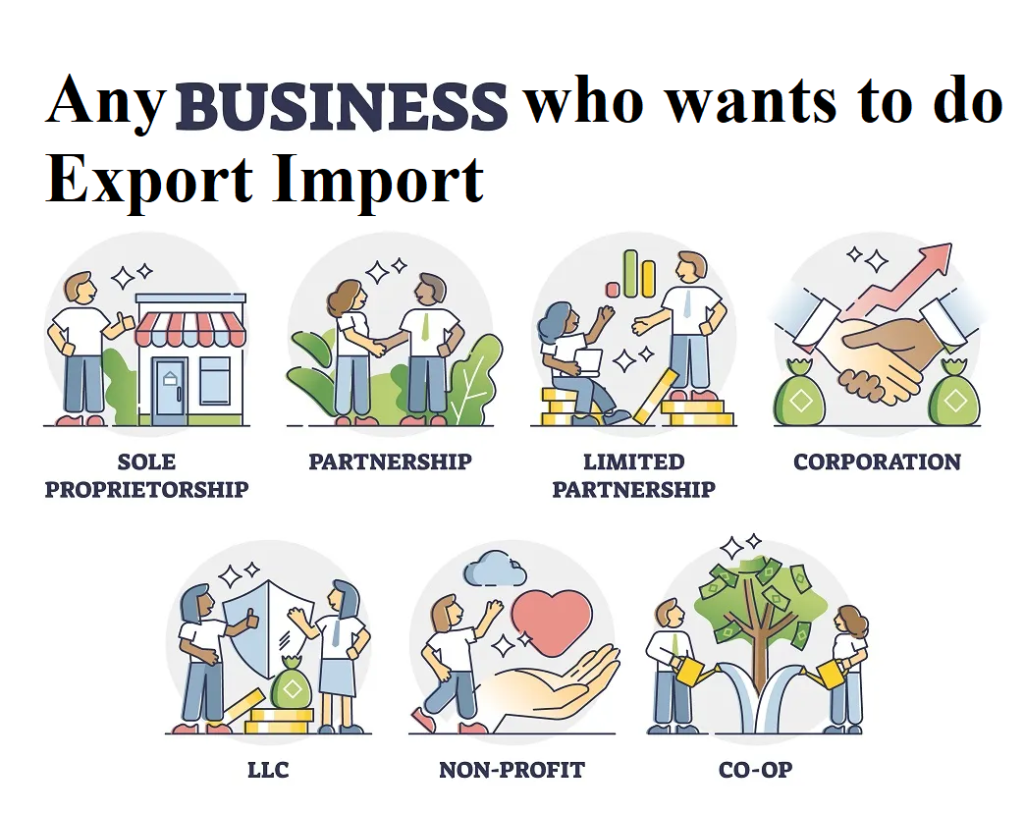
- Sole Proprietorship
- Partnership Firm
- Private Limited Company (Pvt. Ltd)
- Public Company
- Co-operative
If you are a small trader exporting to India or a large manufacturer importing machinery, EXIM code is required for all.
Documents Required for EXIM Code Registration
To apply for an EXIM code, you must prepare the following documents:
A) For Sole Proprietorship / Partnership Firms
- Business Registration Certificate
- PAN Certificate
- VAT Certificate (if applicable)
- Owner’s Citizenship Copy
- Passport-sized Photo
- Bank Account Details (Firm Account)
- Application Form (from Customs office)
- Self-Declaration Letter
B) For Private Limited Company
- Company Registration Certificate (from OCR)
- MOA & AOA (Memorandum & Articles of Association)
- PAN Certificate
- VAT Certificate (if applicable)
- Board Resolution to obtain EXIM Code
- Director’s Citizenship Copies
- Company Stamp
- Bank Account Details (Company Account)
How to Get EXIM Code in Nepal — Step-by-Step Process
Below is the simplest and most accurate guide to obtaining your EXIM code.
Step 1: Register Your Business
Before applying for EXIM code, your business must be officially registered with:
- Local Ward Office = for Sole Proprietorship
- Company Registrar’s Office = for Pvt. Ltd
- PAN Registration = required for all
- VAT Registration = optional but recommended
Without business registration, customs will not issue an EXIM code.
Step 2: Visit the Nearest Customs Office
Go to any major customs office. Most traders prefer:
- Birgunj Customs (Best for exports to India)
- TI Airport Customs (For air cargo)
- Bhairahawa / Kakarvitta (Eastern/Western border trade)
At the customs office, visit the EXIM Registration Counter.
Step 3: Fill Out the EXIM Code Application Form
Customs will provide you with a form where you need to fill in details like:
- Business name
- PAN number
- Address
- Bank details
- Type of business
- Nature of trade (export/import/both)
- Contact number
Double-check all information to avoid mistakes.
Step 4: Submit Required Documents
Attach all necessary documents with your application:
- Registration certificate
- PAN
- Citizenship
- Photos
- Bank details
- Stamp
Customs officials will verify your documents.
Step 5: Custom Office Verification
The customs department verifies:
- Your business legitimacy
- PAN registration
- Bank account authenticity
- Directors/owners identity
Sometimes they may request clarification if something is unclear.
Step 6: Pay the Registration Fee
The EXIM code registration fee is nominal — usually between Rs. 500 to Rs. 1,000 depending on documentation and location. You will receive an official receipt.
Step 7: Collect Your EXIM Code Certificate
Once approval is completed, the customs office will issue your EXIM Code Certificate.
The certificate includes:
- EXIM Code number
- Business name
- Address
- Date of issue
- Customs department seal
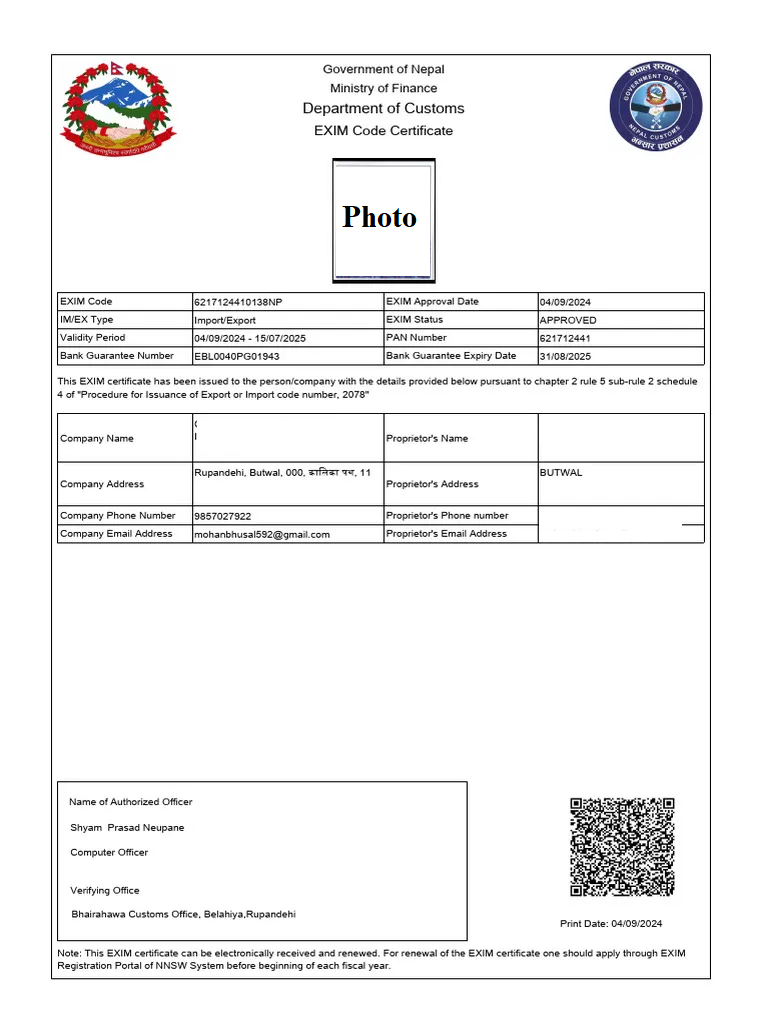
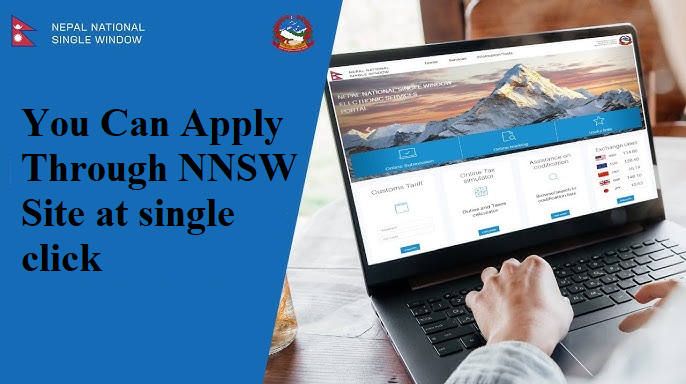
The EXIM Code is valid for lifetime and require yearly renewal for Exim code license through NNSW site.
Processing time:
1–2 working days (sometimes same day)
How Long Does It Take to Get an EXIM Code?
If all your documents are correct:
- ⏱ Same Day — In many border customs
- ⏱ 1–2 Days — Usually at busy offices
- ⏱ 3–5 Days — If documents need verification
Cost of Getting EXIM Code in Nepal
The cost is very affordable:
- Application fee: Rs. 500–1,000
- Photocopy & documentation: Rs. 50–100
- Stamp & stationery: Rs. 20–50
Total cost is typically below Rs. 1,000.
Common Mistakes to Avoid While Applying
Many beginners face delays due to simple mistakes. Avoid these:
❌ Mismatch between PAN and business name
❌ Wrong or missing bank account details
❌ Not attaching citizenship copies of partners/directors
❌ Not having company stamp
❌ Confusion in ownership structure
Always double-check everything before submitting.
Who Needs an EXIM Code? (Practical Examples)
You need an EXIM code if:
- You export carpets to India
- You import raw materials for manufacturing
- You sell Nepali handicrafts online abroad
- You import electronics or machinery
- You export herbal products
- You are running a trading company
Even small exporters sending goods through Raxaul, Sunauli, or Kakarvitta require an EXIM code.
Advantages of Having an EXIM Code for Exporters
✔ Quick Customs Clearance
Trucks/goods pass smoothly without delay.
✔ Eligible for Export Cash Incentives
Exporters receive 2%–5% government rebates.
✔ Build International Clients
Buyers trust registered exporters.
✔ Bank support for LC, pre-shipment loans
Banks require EXIM code for export finance.
Is EXIM Code Required for Exporting to India Only?
Yes.
Even though India and Nepal share an open border, commercial exports still require:
- EXIM code
- Commercial invoice
- Customs clearance
So if you’re exporting to India — you definitely need EXIM code.
Conclusion
Getting an EXIM code in Nepal is a simple and fast process, but it is one of the most important steps for anyone starting an export or import business. Once you have an EXIM code, you can legally send goods abroad, clear customs, open LC, receive foreign payments, and expand your business internationally.
If your documents are prepared properly, the entire process takes less than 1–2 days.
An EXIM code is valid for lifetime, so it’s a one-time investment for long-term business growth.