If you are involved in export-import business, logistics, freight forwarding, or international trade, you must have heard terms like EXW, FOB, CFR,CIF, FCA, DDP, DAP, CPT, and CIP. But some times we confused about these all terms and specially for the beginners who just enter in the export import business.
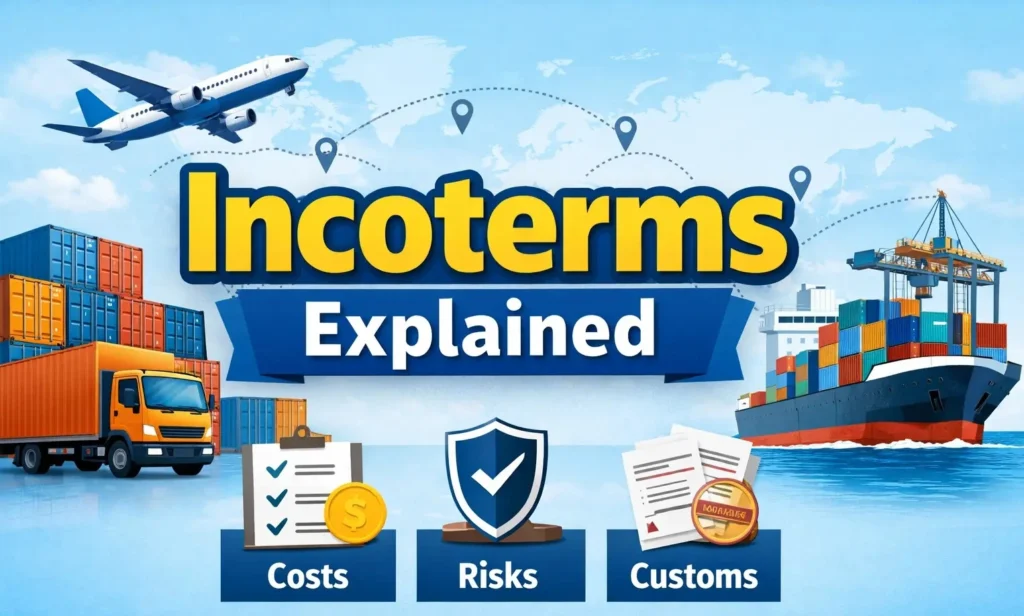
Many beginners get confused because these terms decide:
- Who will pay freight charges?
- Who will pay insurance?
- Who is responsible for customs clearance?
- Who will handle delivery to the final destination?
- At what point the risk transfers from seller to buyer?
To solve this confusion, international trade uses Incoterms.
In this article, we will explain all the major Incoterms in a simple and practical way, with real-life examples and comparison tables.
What Are Incoterms?
Incoterms stands for International Commercial Terms. They are globally accepted trade terms published by the International Chamber of Commerce (ICC). These terms clearly define the responsibilities of the exporter (seller) and importer (buyer).
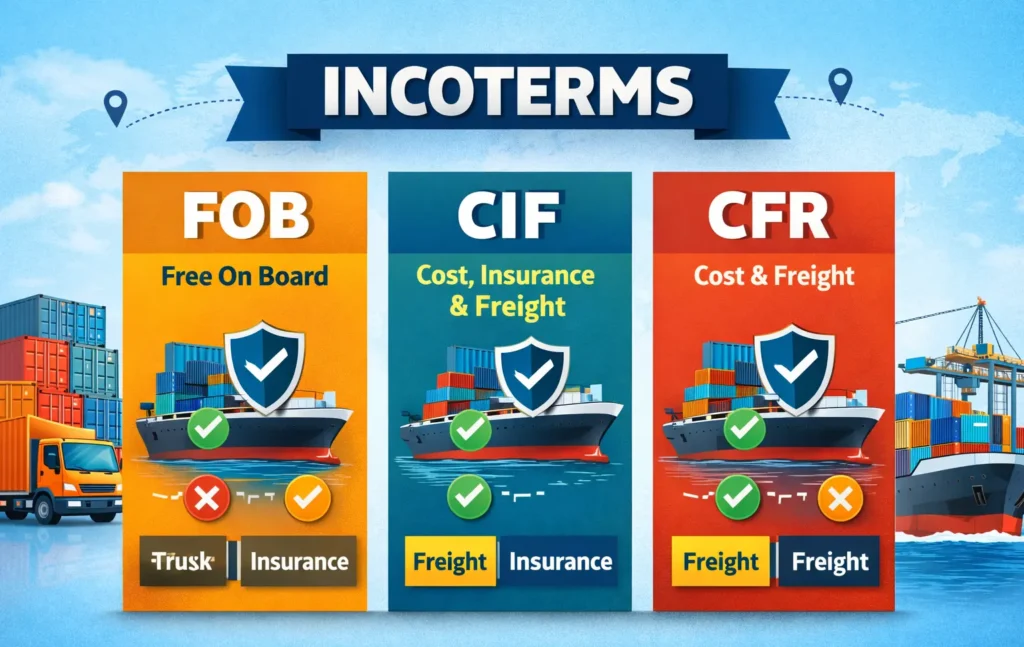
Each Incoterm tells who will handle important things like shipping work, transportation cost, insurance cost, and risk of damage or loss during delivery.
When people understand Incoterms, international trade becomes smoother because there is no confusion about who will pay and who will do what at each step.
Incoterms mainly decide two things:
1. Cost Responsibility
Who pays for transport, freight, insurance, customs, etc.
2. Risk Transfer Point
At which point the risk of damage or loss transfers from seller to buyer.
Real-Life Example Used in This Article
To understand all terms easily, we will use one common example:
Seller (Exporter): Carpet Manufacturer in Birgunj, Nepal
Buyer (Importer): Carpet Dealer in Kenya, South Africa
Transport Route: Birgunj → Kolkata Port → Mombasa Sea Port → Buyer Warehouse
Product Value:
- 100 carpets
- Cost per carpet: $50
- Total goods value: $5,000
Now let’s understand each Incoterm one by one.
1. EXW (Ex Works) – Cheapest for Seller
Under EXW, the seller only makes the goods available at their factory or warehouse. The buyer is responsible for everything after that.
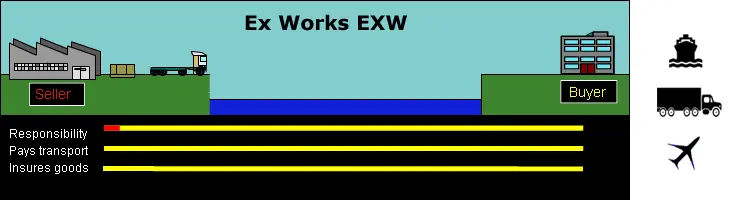
EXW = “Pick the goods from my place”
Basically here Seller says: “I will manufacture and pack the goods.
I will keep it ready at my factory.
You come, pick it up, and do everything else.”
| Seller Responsibilities in EXW | Buyer Responsibilities in EXW |
| Manufacturing | Pickup from factory |
| Packing | Inland transport |
| Goods ready at factory gate | Export customs |
| Freight | |
| Insurance (If needed) | |
| Import duty | |
| Final delivery |
Real-Life Example:
Exporter says:
“EXW Birgunj, Nepal – $5,000” This means the Kenya buyer must arrange transport from Birgunj to Kenya South Africa. Best for: Sellers who want minimum responsibility
Risk for buyer: High
2. FOB (Free On Board) – Most Popular in Sea Export
FOB is used for sea shipments. Under FOB, seller is responsible until goods are loaded on the ship at the port. After the goods are loaded on the ship, risk and cost transfer to the buyer.
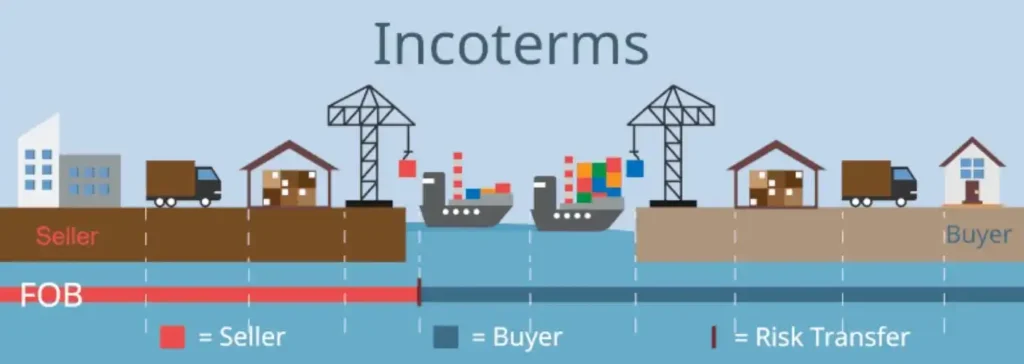
FOB = “Seller loads on ship, buyer handles sea freight onwards” Seller is responsible till goods are loaded on the ship at the port of shipment. Buyer is responsible from the ship onwards (sea freight, insurance, import, delivery).
| Seller Responsibilities in FOB | Buyer Responsibilities in FOB |
|---|---|
| Produce the goods | Sea freight – booking the ship, paying freight charges |
| Pack the goods | Insurance – optional but recommended for goods in transit |
| Transport goods to the port of shipment | Import customs clearance – paying import duty, VAT/GST |
| Load goods onto the ship | Transport from destination port to warehouse |
| Handle export customs clearance | Any risk during sea transport and after |
Real-Life Example:
Exporter says:
“FOB Kolkata Port – $5,800” This means exporter will deliver carpets to Kolkata port and load them on vessel. Buyer pays freight from Kolkata to Mombasa, Kenya. Best for:Exporters who want balance responsibility. Most common term used in Nepal-India exports.
3. CFR (Cost and Freight) – Seller Pays Freight, Buyer Pays Insurance
Under CFR, seller pays cost of goods + freight to destination port. But buyer pays insurance.
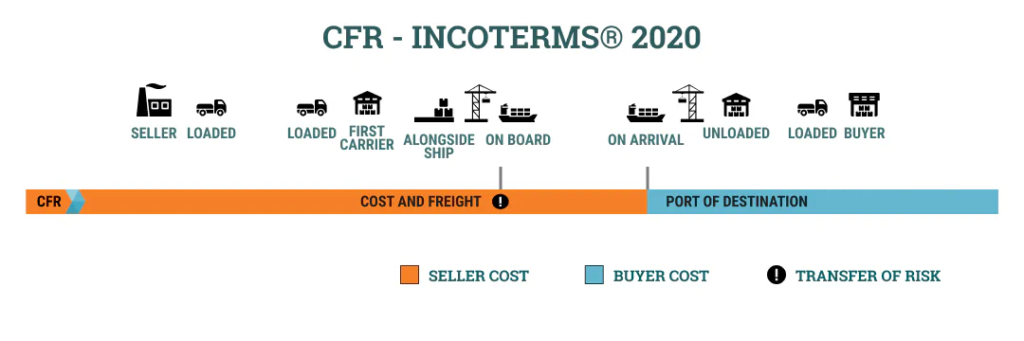
| Seller Responsibilities in CFR | Buyer Responsibilities in CFR |
|---|---|
| All FOB costs | Insurance |
| Freight charges till destination port | Import duty |
| Destination port charges | |
| Local delivery |
Real-Life Example:
Exporter says:
“CFR Mombasa Port – $6,200” Seller pays freight till Hamburg port. But if cargo gets damaged in sea, buyer faces loss unless insured. Best for: Buyers who have cheaper insurance options Risk: Buyer must insure goods properly
4. CIF (Cost, Insurance and Freight) – Best for Buyer Comfort
CIF is similar to CFR but includes insurance.
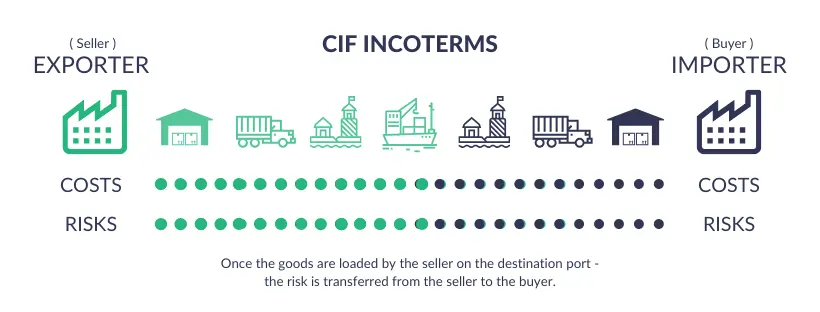
| Seller Responsibilities in CIF | Buyer Responsibilities in CIF |
|---|---|
| All FOB costs | Import duty |
| Freight till destination port | Destination port charges |
| Insurance till destination port | Delivery to warehouse |
Real-Life Example:
Exporter says:
“CIF Mombasa, Kenya – $6,350” Seller arranges freight and insurance till Mombasa port. Best for: New importers who want peace of mind. Common in international trade
5. FCA (Free Carrier) – Better Version of EXW
Under FCA, The seller delivers the goods to a carrier or another person nominated by the buyer at a named place. Seller fulfills responsibility once goods are delivered to the carrier at the agreed location.Buyer takes responsibility after that point, including risk and cost. It can be a port, ICD, airport, or warehouse.
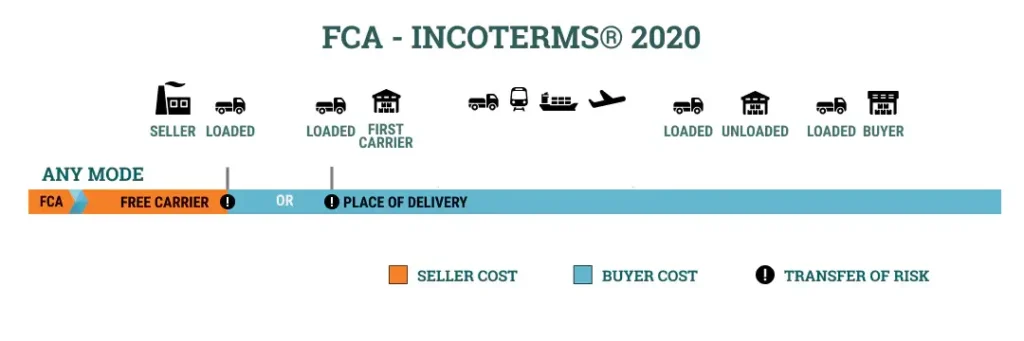
FCA = “Seller hands goods to the transporter chosen by buyer”
| Seller Responsibilities in FCA | Buyer Responsibilities in FCA |
|---|---|
| Produce & Pack the goods | Transport from delivery point onwards |
| Deliver goods to agreed location (factory, warehouse, port, airport, or other place) | Insurance (optional but recommended) |
| Load goods if the delivery is at seller’s premises | Import customs clearance – paying duties and taxes |
| Handle export customs clearance | Final delivery to warehouse |
Real-Life Example:
Exporter says:
“FCA Birgunj ICD – $5,400” Seller delivers carpets to Birgunj Inland Container Depot (ICD) and hands them to buyer’s forwarder. Best for: Road + container shipments Advantage: More professional than EXW
6. DDP (Delivered Duty Paid) – Complete Door-to-Door Delivery
The seller is responsible for delivering goods to the buyer’s place in the destination country, paying all costs, duties, and taxes.Seller bears all risk and cost until goods reach the buyer.Buyer’s responsibility is minimal, usually just receiving the goods.
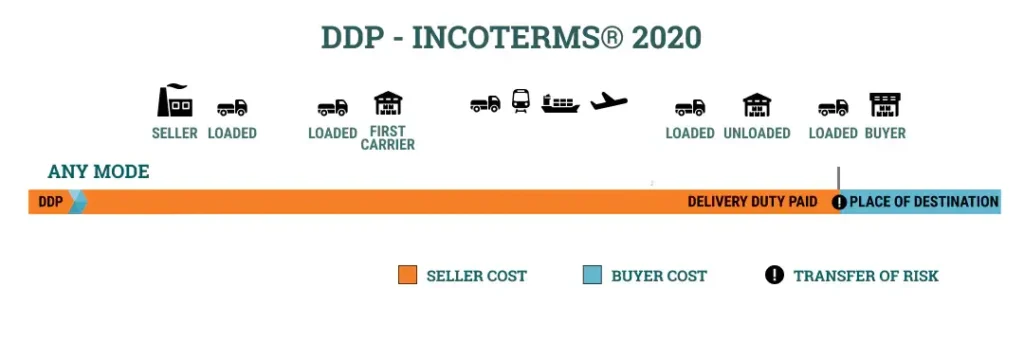
DDP = “Seller does everything, buyer just receives.
| Seller Responsibilities in DDP | Buyer Responsibilities in DDP |
|---|---|
| Produce and pack goods | Receive goods at the specified place |
| Transport to port of shipment or transport hub | Minimal paperwork (usually acknowledgment of delivery) |
| Handle export customs | No transport, no import customs, no insurance required. |
| Pay freight / shipping cost | |
| Arrange insurance (recommended) | |
| Handle import customs clearance, duties, and taxes in buyer’s country | |
| Deliver goods to buyer’s specified place (warehouse, factory, or store) |
Real-Life Example:
Exporter says:
“DDP Kenya Warehouse – $8,000” Buyer will receive carpets without worrying about duty or customs. Best for: Buyers who want full hassle-free service. Risk for seller: High (because duty and regulations can change)
7. DAP (Delivered At Place) – Seller Delivers to Buyer Location
The seller delivers the goods to a named place in the buyer’s country, ready for unloading. Seller pays all costs and bears risk until goods reach the agreed destination.Buyer is responsible only for import customs clearance and duties, unless otherwise agreed.
DAP = “Seller brings goods to your location, buyer handles import
| Seller Responsibilities in DAP | Buyer Responsibilities in DAP |
|---|---|
| Produce and pack goods | Import customs clearance – pay duties, VAT, GST |
| Transport goods to port of shipment or transport hub | Unload goods at final warehouse |
| Handle export customs clearance | Any additional local transport after delivery point |
| Pay freight/transport to the named place | |
| Arrange insurance (recommended) | |
| Deliver goods ready for unloading at buyer’s specified place | |
| Provide invoices and shipping documents |
Exporter says:
“DAP Kenya Warehouse – $7,200”Seller delivers carpets to buyer warehouse door.Buyer pays import duty and customs clearance.Best for: Buyers who want delivery to door but can handle import duty.Very useful for e-commerce and bulk trade
8. CPT (Carriage Paid To) – Freight Paid But Insurance Not Included
Seller pays the transportation cost to deliver goods to the agreed destination place, but risk transfers to the buyer once goods are handed over to the first carrier. Seller pays freight/transport cost.Buyer bears risk after goods are handed to carrier.
CPT = “I will pay transport, but risk is yours after handover.”
| Seller Responsibilities in CPT | Buyer Responsibilities in CPT |
|---|---|
| Manufacture goods | Bear risk after goods are handed to first carrier |
| Packing | Insurance (optional but recommended) |
| Export customs clearance | Import customs clearance |
| Deliver goods to the first carrier (truck, freight forwarder, airline, etc.) | Pay import duties, VAT/GST |
| Pay transportation charges up to the agreed destination | Unloading charges at destination (usually) |
| Provide invoice, packing list, transport document (LR / AWB / Bill of Lading) | Local delivery after arrival (if needed) |
Real-Life Example:
Exporter says:
“CPT Kenya Warehouse – $6,400” Seller pays transport till Kenya warehouse but insurance is buyer responsibility. Best for: Multi-mode transport. Risk: Buyer should insure goods separately.
9. CIP (Carriage and Insurance Paid To) – CPT + Insurance
CIP is the upgraded version of CPT. Seller pays carriage plus insurance.
CIP = “Seller pays freight + insurance, but risk transfers early.”
| Seller Responsibilities in CIP | Buyer Responsibilities in CIP |
|---|---|
| Manufacture & Packing | Bear risk after goods are handed to first carrier |
| Export customs clearance | Import customs clearance |
| Deliver goods to the first carrier (truck/airline/freight forwarder) | Pay import duties, VAT/GST |
| Pay carriage (freight) cost till destination | Unloading cost at destination (mostly) |
| Arrange cargo insurance till destination | Final delivery from destination place to warehouse (if not included) |
Real-Life Example:
Exporter says:
“CIP Kenya Warehouse – $6,550” Seller arranges freight and insurance till buyer location. Best for: Air cargo and multimodal shipments. Safer than CPT.
Comparison Table: FOB vs CIF vs CFR vs EXW vs DDP vs Others.
| Term | Seller Pays Transport | Seller Pays Freight | Seller Pays Insurance | Seller Pays Import Duty | Delivery Location |
| EXW | ❌ | ❌ | ❌ | ❌ | Factory |
| FCA | ✅ (to carrier) | ❌ | ❌ | ❌ | Carrier/ICD |
| FOB | ✅ | ❌ | ❌ | ❌ | On ship at port |
| CFR | ✅ | ✅ | ❌ | ❌ | Destination port |
| CIF | ✅ | ✅ | ✅ | ❌ | Destination port |
| CPT | ✅ | ✅ | ❌ | ❌ | Destination place |
| CIP | ✅ | ✅ | ✅ | ❌ | Destination place |
| DAP | ✅ | ✅ | Usually yes | ❌ | Buyer place |
| DDP | ✅ | ✅ | ✅ | ✅ | Buyer place |
FOB vs CIF vs CFR (Most Confusing Comparison)
| FOB | CFR | CIF |
|---|---|---|
| Seller delivers goods on ship | Seller pays freight till destination port | Seller pays freight + insurance till destination port |
| Buyer pays freight + insurance | Buyer pays insurance | Buyer only pays import duty and delivery |
Simple way to remember:
- FOB = No Freight
- CFR = Freight Included
- CIF = Freight + Insurance
Which Incoterm is Best for Exporters?
✅ Best for Seller Safety:
EXW / FCA
✅ Best for Balanced Deal:
FOB
✅ Best for Buyer Attraction:
CIF
✅ Best for Premium Customers:
DAP / DDP
Which Incoterm is Best for Importers?
Beginner Importer:
✅ CIF or DAP
Experienced Importer:
✅ FOB or CFR
Importer who wants full delivery:
✅ DDP
Conclusion: Understanding Incoterms Makes Trade Easy
Incoterms like FOB, CIF, CFR, EXW, DDP, FCA, DAP, CPT, and CIP are the backbone of international trade. They decide who will pay charges and who will bear risk.
If you are exporting from Nepal, India, or any other country, understanding these terms will help you:
- Quote correct pricing
- Avoid loss
- Reduce disputes with buyer
- Build trust in business
Final Summary:
- EXW = Buyer handles everything
- FCA = Seller delivers to carrier
- FOB = Seller loads goods on ship
- CFR = Seller pays freight
- CIF = Seller pays freight + insurance
- CPT = Seller pays carriage only
- CIP = Seller pays carriage + insurance
- DAP = Seller delivers to place, buyer pays duty
- DDP = Seller pays everything
Frequently ask questions (FAQ):
Q1. What is the main difference between FOB and CIF?
FOB means buyer pays freight and insurance, while CIF means seller pays freight and insurance.
Q2. Which is better for exporter FOB or CIF?
FOB is safer for exporter, but CIF helps attract more buyers.
Q3. What is the safest Incoterm for importers?
CIF, CIP, or DDP are safest because freight and insurance are included.
Q4. What is the highest responsibility Incoterm?
DDP is the highest responsibility because seller pays import duty and taxes.