
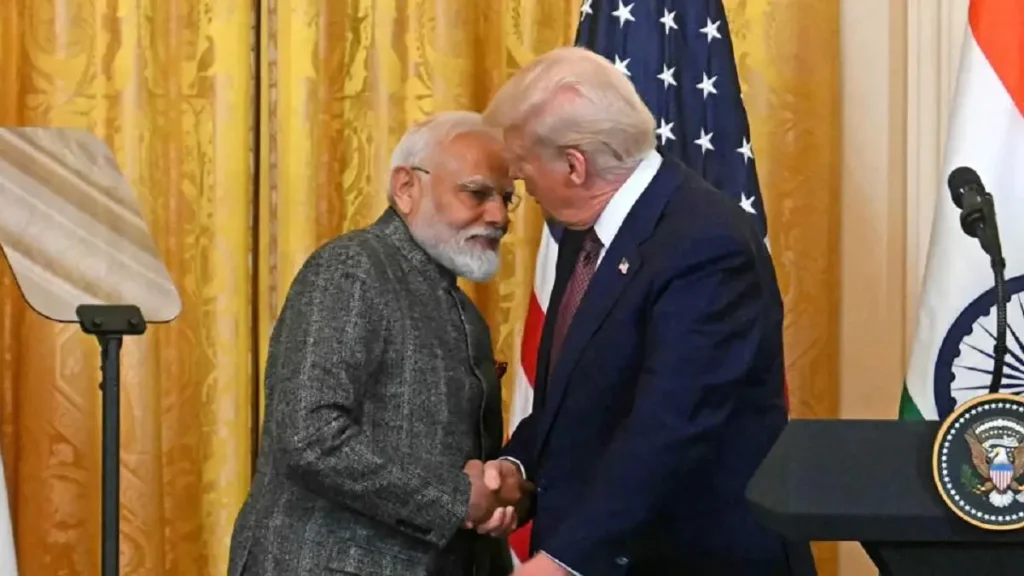
In a landmark move, the United States and India have signed a new interim trade deal, marking a significant step toward strengthening economic ties between the two countries. The agreement, signed recently by President Donald Trump and Indian officials, includes major changes to tariffs, trade rules, and energy cooperation. Experts say it is a pivotal moment that could reshape the trade landscape for businesses in both nations.
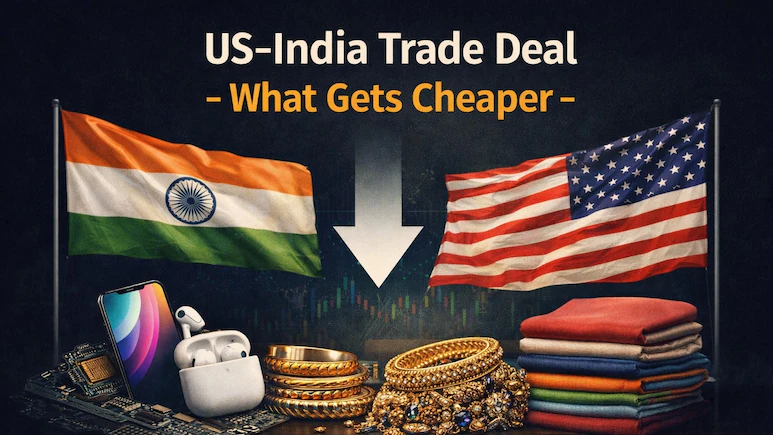
Key Highlights of the Interim Trade Deal
- Removal of 25% U.S. Tariff on Indian Goods: The punitive tariff imposed over India’s Russian oil imports has been lifted, restoring market competitiveness.
- Reduction of Reciprocal Tariffs: Many Indian products now face only 18% duty in the U.S., down from higher previous rates.
- Zero-Tariff Access for Priority Sectors: Selected Indian exports like farm products, pharmaceuticals, and other high-value goods enjoy tariff-free access.
- Market Access Commitments: Both countries agreed to reduce non-tariff barriers and streamline regulations for industrial and tech goods.
- Energy and Technology Collaboration: India will increase purchases of U.S. energy products and cooperate on technology goods and intellectual property standards.
- Protection of Sensitive Indian Sectors: Farmers, MSMEs, and artisans are fully protected under the framework.
Strategic Significance: The deal strengthens defense, energy, and technology ties while boosting Make in India and U.S.–India economic partnership
Impact on Indian Exporters
For Indian exporters, the deal is a welcome relief. The U.S. market is one of the largest for Indian goods, and the removal of punitive tariffs opens new opportunities for textiles, pharmaceuticals, machinery, and other sectors. Exporters can now plan long-term investments and contracts without the uncertainty of high duties.
The 18% tariff rate also provides a competitive advantage over regional competitors. Previously, Indian goods faced tariffs as high as 25%, making them less competitive. This deal can help Indian exporters secure larger market shares in North America, potentially increasing revenues and creating more jobs in India.
Benefits for U.S. Businesses
American firms will gain greater access to India’s industrial and agricultural markets. Reduced tariffs and simplified regulations make exporting machinery, technology, and other high-value goods easier. Increased Indian purchases of U.S. energy products will provide long-term revenue streams, supporting business growth in multiple sectors.
Reactions from India and Global Experts
- Indian Government: Officials welcomed the deal as a “boost to Make in India” and a step toward global competitiveness. The government emphasized the importance of energy cooperation and strategic alignment with the U.S.
- Experts and Analysts: Many trade experts noted that the interim deal balances economic and strategic priorities. While some criticism emerged over potential concessions favoring U.S. interests, overall, the deal is expected to enhance India’s exports and strengthen trade ties.
- Global Markets: Financial analysts expect the deal to stabilize trade relations and reduce uncertainty for investors, particularly in sectors like energy, defense, and technology.
Roadmap to a Full Bilateral Trade Agreement
This interim framework is the first step toward a comprehensive Bilateral Trade Agreement (BTA). The final legal text and detailed commitments are expected by March 2026. Once complete, this agreement will formalize trade rules, further lower barriers, and strengthen economic and strategic ties.
Economic Implications
- For Indian exporters: More competitive exports in textiles, machinery, and pharmaceuticals.
- For U.S. exporters: Easier access to India’s growing markets for industrial and agricultural goods.
- For consumers: Lower tariffs may translate to more affordable goods in both countries.
For policymakers: Predictable trade policies strengthen long-term economic diplomacy
Summary of the Deal
The new U.S.–India trade deal is a comprehensive framework designed to:
| Area | Latest Development |
| U.S. Punitive Tariff | 25% removed |
| Reciprocal Tariffs | Reduced to 18% |
| Zero-Duty Access | High-value Indian exports |
| Market Access | Improved for industrial and tech goods |
| Energy & Technology | Expanded cooperation |
| Protection of Sensitive Sectors | Farmers, MSMEs, and artisans protected |
| Interim Framework | Paves the way for full BTA by March 2026 |
Conclusion
The US–India interim trade deal represents a historic step forward in economic and strategic partnership. By lifting tariffs, opening markets, and ensuring protection for sensitive domestic sectors, the agreement is expected to boost exports, enhance investor confidence, and strengthen long-term collaboration. Businesses and consumers on both sides stand to benefit as India and the U.S. enter a new era of trade cooperation.